
Adaptive Software Development: How to Build Software When Requirements Change Daily
02 Sep 2026
You locked in the product roadmap eight weeks ago. Since then, a competitor shipped a similar feature, your biggest customer asked for a completely different workflow, and leadership wants an AI capability added before next quarter's board meeting. If your development process treats these shifts as disruptions instead of expected inputs, your team is already behind. Adaptive Software Development (ASD) exists for exactly this kind of environment, and it's becoming the default operating model for engineering teams building fast-moving SaaS, fintech, and AI products anywhere in the world.
Quick Summary: What Is Adaptive Software Development (ASD)?
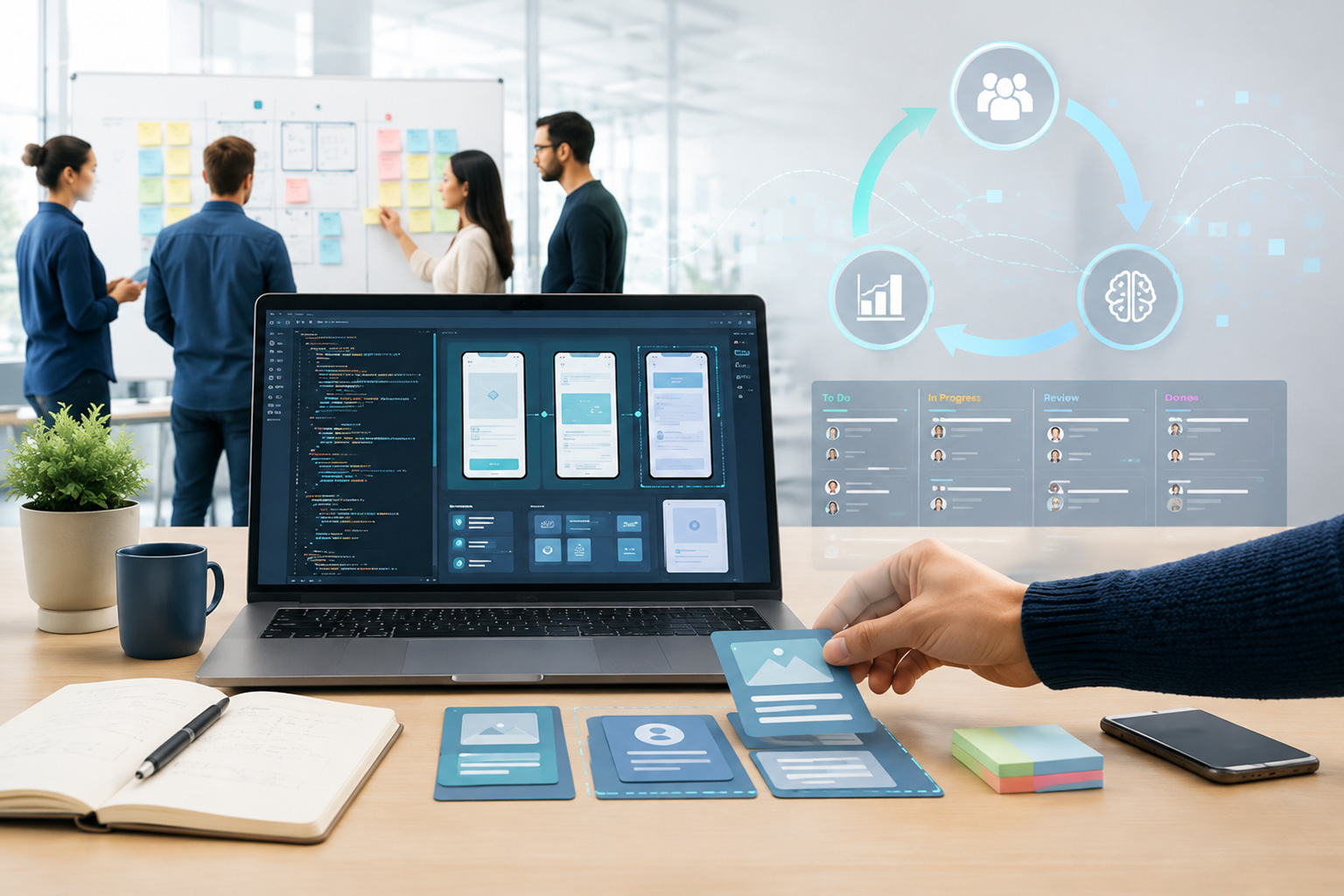
Adaptive Software Development (ASD) is an Agile engineering framework built for high-uncertainty environments. Instead of deterministic planning, it runs on a continuous Speculate → Collaborate → Learn cycle, so development teams can respond to shifting market demands quickly, without accumulating technical debt along the way.
1. The Planning Trap: Why Traditional Frameworks Fail in Fast-Moving Markets
Most engineering leaders don't choose the wrong framework on purpose; they inherit it. A plan gets built, stakeholders sign off, and the team commits to a fixed scope for the next two, three, or six months. Then reality intervenes.
- The Reality Check: Freezing requirements six months out for an AI, fintech, or SaaS product is a reliable way to ship software the market has already moved past.
- The Problem with Rigidity: Traditional Waterfall, and even overly rigid Scrum sprints, treat late-stage requirement changes as disruptions to manage around, rather than the competitive signal they actually are.
If you've ever watched a sprint get "protected" from a change your customers were actively asking for, you've already felt this gap. The real cost isn't the delayed feature; it's the engineering hours spent building the wrong version of it, then rebuilding it once the market feedback finally reaches the roadmap. ASD is built to close that gap before it opens.
2. Waterfall vs. Scrum vs. Adaptive Software Development (ASD)
Here's how the three approaches compare when requirements are genuinely volatile, not just occasionally revised.
| Feature Vector |
Traditional Waterfall |
Standard Scrum |
Adaptive Software Development (ASD) |
| Planning Mindset |
Deterministic / fixed |
Sprint-based backlog |
Speculative & mission-driven |
| Handling Change |
High friction / formal change orders |
Managed at sprint boundaries |
Continuous & anticipated driver |
| Primary Risk Focus |
Schedule slippage |
Velocity drops |
Market irrelevance & misalignment |
| Best Fit |
Static, legacy, compliance-heavy systems |
Structured product roadmaps |
High-growth startups & rapid R&D |
3. The Three Phases of the Adaptive Software Development Lifecycle
Phase 1: Speculate, Dynamic Mission Planning
Instead of writing rigid specs, your team defines release milestones, core technical constraints, and a broad product vision, with the explicit understanding that individual features will evolve as you learn more. This phase replaces the false confidence of a detailed six-month spec with a mission your engineers can navigate toward, even as the path shifts.
Phase 2: Collaborate, Cross-Functional Execution
ASD depends on high-trust communication between developers, QA, and business stakeholders, so ambiguous or fast-changing codebases stay navigable instead of turning into bottlenecks. In practice, this means shorter feedback loops between the people writing code and the people closest to the customer, not just more meetings.
Phase 3: Learn, Continuous Feedback Loops
Customer demos, automated testing, and frequent builds give your team a constant read on real-world performance, so you can adjust direction immediately instead of waiting for the next planning cycle. Over time, this phase is what prevents ASD from drifting into unstructured chaos; every speculative bet gets checked against real usage data before the team doubles down on it.
How to Get Started with Adaptive Software Development
Moving from Waterfall or rigid Scrum to ASD doesn't require a full re-org. Most engineering teams phase it in over one or two release cycles:
- Identify one high-uncertainty workstream, a new AI feature, an unproven market, or an integration with unclear requirements, and run it through the Speculate → Collaborate → Learn cycle first.
- Replace the detailed six-month spec for that workstream with milestones and constraints, reviewed every two to four weeks instead of locked at kickoff.
- Build in a lightweight feedback mechanism, customer demos, usage analytics, or automated test coverage, before the first release, not after.
- Give the cross-functional team (engineering, QA, product) direct access to customer feedback, rather than routing it through a single product owner.
- Expand the model to additional workstreams once the team has a full cycle of real data on what worked.
4. Frequently Asked Questions
What is the main difference between Agile and Adaptive Software Development?
ASD is a specific sub-framework of Agile. General Agile focuses on iterative delivery; ASD specifically addresses high-complexity, unpredictable projects by replacing upfront planning with speculative cycles.
When should a company choose ASD over Scrum in 2026?
Choose ASD when product requirements are volatile, technological risk is high, or you're building an innovative R&D platform where a fixed sprint backlog limits how fast you can adapt.
Does Adaptive Software Development work for regulated industries like fintech or healthcare?
Yes, with guardrails. Regulated teams typically pair the Speculate → Collaborate → Learn cycle with fixed compliance checkpoints, so the product can still evolve quickly while audit and security requirements stay non-negotiable.
How long does it take to transition an existing team to ASD?
Most teams see a working rhythm within one to two release cycles, typically four to eight weeks, because ASD builds on Agile practices most engineers already know, rather than replacing them outright.
5. Build High-Performance Software with Dedicated Engineering Pods
Don't let rigid planning slow down your product launch. NanoByte Technologies connects you with pre-vetted, senior Agile developers and software architects through outsourced engineering pods or fully custom SaaS development services, who build, iterate, and scale complex applications in step with your market, wherever your team is based.
Whether you need to hire remote agile developers to extend an in-house team or want a dedicated pod running end-to-end, NanoByte Technologies' engineers work inside an ASD-driven process from day one, so speculative planning and continuous learning aren't just theory; they're how your roadmap actually ships.
Because NanoByte Technologies staffs teams across multiple time zones, your engineering pod can run the Collaborate and Learn phases in near-continuous cycles; a demo or a build going out while your in-house team is offline is normal, not an exception. That's a meaningful advantage for founders and engineering leaders who need velocity without adding full-time headcount to a single location.
Building a High-Growth SaaS Platform or R&D Product?
Accelerate your development cycle with flexible, high-velocity engineering teams. Connect with NanoByte Technologies' software architects for a free 15-minute Agile & ASD architecture assessment, available to teams anywhere in the world.
→ Book Your Free Architecture Assessment


.jpg)