
The 2026 Tech Stack Guide: How Startups and Enterprises Can Choose Scalable, Secure, Future-Ready Tools
.jpg)
10 Dec 2025
Choosing a tech stack in 2026 can feel like walking into a massive hardware store without a list. One wrong choice can slow development and increase costs for years.
Technology stack selection is not simply a technical one. It directly impacts on the speed of development, security, costs and your capacity to scale internationally. Businesses in the year 2026 will experience increased release cycles, reduced budgets and compliance requirements. The improper stack selection may cause a reduction in the speed of delivery, higher cloud expenses, or security vulnerabilities that are hard and costly to fix in the future.
This blog will explore the 2026 tech stack guide and how startups and enterprises can choose scalable, secure and future ready tools.
Step 1: Map Your Product, Team, And Risk To The Right Tech Stack
The right technology stack decisions begin way before the discussion of frameworks or databases. They start with a clear picture of what you are building, the person who is building it and the level of risk that you can risk.
You need to select a technical stack that best suits your products and size of your team and not a generic, one-size-fits-all answer. Set goals of your products, staff capabilities, budget, and security needs first and then shortlist tools.
Clarify Product Goals, Users, And Growth Plans
Your product stage and type should have a corresponding stack. The requirements of an MVP of a new SaaS concept are not the same as a v2 platform with thousands of daily users.
Think about:
- MVP vs v2 or v3
- Internal tool vs customer-facing app
- B2C with spikes in traffic vs steady B2B usage
These questions help startups and enterprises clarify their tech stack needs for 2026:
- Who are the essence users and how frequently will they use the product?
- How much traffic do you think you will get within the first 12 to 24 months?
- Sensitivity of the data, e.g., health, finance, or basic profiles?
- Which performance is the most important: page speed, real-time updates, or ample analytics?
- Are you building a robust offline or a global presence right out?
The answers will be used in all future decisions to develop a scalable, and secure tech stack.
A social application that engages consumers and requires unpredictable traffic spikes and real-time performance and edge delivery. Conversely, a B2B workflow platform must have predictable uptime, powerful role based access control and consistent data structures. Technical priorities are dependent on the nature of your product.
Assess Your Team Skills, Budget, And Timeline
The most appropriate tech stack for products is that which your group can deliver today, not the one a large technology blog deems to be wonderful.
Name actual skills that you currently possess, like JavaScript, .NET, Java, Python, as well as the frameworks that are familiar to your engineers. Recruit in 2026 as well, as this way you choose to take advantage of talent in your area.
Costs are just as important as team skills. Look at:
- Cloud and managed service prices.
- Database or security tool license fees.
- Not just hosting bills by time to MVP
Hiring Market Check:
Before finalizing your stack, check whether developers for this technology are easily available in your region or the target hiring market. A rare tech stack increases hiring costs and slows down development velocity.
Example of a startup: a small team with good TypeScript knowledge could adopt a well-known full-stack JavaScript framework and a SQL database that is managed, because that way they can deliver in 10 weeks on a small budget.
Example of an enterprise: a big bank might prefer an established enterprise stack of software development (.NET or Java), as it has hundreds of engineers and contracts already.
Define Your Risk Profile For Security And Compliance
Your risk profile determines what a secure tech stack should look like in 2026. When you are in the health, finance, or public sector, you need to consider compliance at the beginning of the day.
Key questions:
- What are the applicable rules, i.e., HIPAA, PCI, GDPR, or internal security policies?
- The sensitivity of the data you store or process?
- Who should have access to what, and how are you going to control that?
Baseline Security Expectations for 2026:
- Zero-trust access by default
- Continuous monitoring and risk scoring
- Encrypted audit logs
- Mandatory MFA for all environments
- Vendor security reviews before onboarding
These set the baseline for security in your 2026 tech stack.
At a basic level, plan for:
- Transit and rest encryption.
- The identity and access control are strong.
- Important actions can be audited.
- Vendor trust and data residency options
When your data and users are distributed across a lot of systems, concepts such as Understanding Cybersecurity Mesh Architecture (CSMA) can assist you in considering a more adaptable form of defense that may be compatible with the current platforms:
Understanding Cybersecurity Mesh Architecture (CSMA)
2026 Tech Trends That Influence Stack Choices
The largest changes in the industry should be reflected in your choice of tech stack in 2026. These trends impact the cost, performance and hiring:
- Testing, generating code and debugging is automated using AI.
- Serverless architecture avoids the unnecessary infrastructure and is on-demand-scaled.
- Edge computing enhances the performance on a global basis with low latency delivery.
- WebAssembly (WASM) makes it possible to have high-performance applications in the browser.
- Zero-Trust security models enhance Identity and Access control.
- Analytics, ETL and real-time pipelines Cloud-native data platforms ease their creation.
The trends assist in selection of tools that will be relevant within the next five years..
Step 2: Choose A Scalable, Secure, Future-Ready Tech Stack Layer By Layer
Having established goals and constraints, you are able to choose a scalable tech stack 2026 layer by layer. Consider four dimensions: frontend, backend and APIs, data, and cloud or DevOps.
You are not searching to find the one that is right (the single stack). You are selecting a good, well-supported tool, which would fit your technology stack strategy in startups or enterprise-level requirements.
Frontend Choices For Modern Web App Tech Stack 2026
In the case of the modern web app technology stack 2026, there are three general patterns:
- Browser-code single-page applications.
- Server-side rendering that sends HTML on each request
- Mixed styles with hybrid arrangements.
Pick based on your real needs:
- Server-side applications or hybrid applications tend to be more popular with heavy marketing pages and SEO.
- Complex, app-like dashboards often fit single-page or hybrid approaches
- Recruiting strategies are important; adopt structures that your market works with.
For mobile, decide if you need:
- Native apps for iOS and Android
- Cross-platform frameworks
- A strong Progressive Web App that behaves like an app in the browser
These options should be thought of as a mini menu of the most useful product development tools 2026 and not an unlimited buffet.
If you want a deeper example of a full-stack web setup, this guide on React and Next.js shows how frontend choices tie into overall architecture:
Build a Next.js 14 full-stack app with Turbopack
Backend And API Layer: Monolith, Modular, Or Microservices
Secure tech stack: You’re at the center, with your APIs and your backend in 2026.
Treat this as a spectrum:
- A monolith designed well can be ideal in early start-ups.
- A modular monolith is appropriate for growing products that have visible domains.
- Microservices suit big, multifaceted corporations comprising numerous teams.
The majority of teams ought to begin small and only divide services once they realize the pain.
Choose languages and frameworks that are:
- Common and well supported
- Aligned with your team skills
- Backed by strong community or vendor support
For security, bake in:
- Authentication: Who are you
- Authorization: What can you do
- Clean, versioned APIs that hide internals and protect data
These trends are applicable to a lean startup tech stack approach as well as to a large enterprise software development stack.
Data, Storage, And Analytics For Scale And Reliability
Consider data to be the recollection of your product. If it fails, everything fails.
Simple rules:
- Use relational of strong consistency, reporting, and most SaaS applications.
- NoSQL Use when you require a flexible schema or large scale on a simple access pattern.
In order to support a scalable tech stack in 2026, you will most probably add:
- Caching, to speed up frequent reads
- To work with spikes and background work in Message queues.
Plan for:
- Automatic backups
- Disaster recovery across regions
- Low-level analytics and BI, not a late-stage addition.
Automated cloud stores and analytics systems reduce much of the workload, particularly when not having a full-time DB administrator in a team.
For more depth on growing data-heavy SaaS, this cloud-native guide is a helpful companion:
Building scalable SaaS with cloud-native architecture
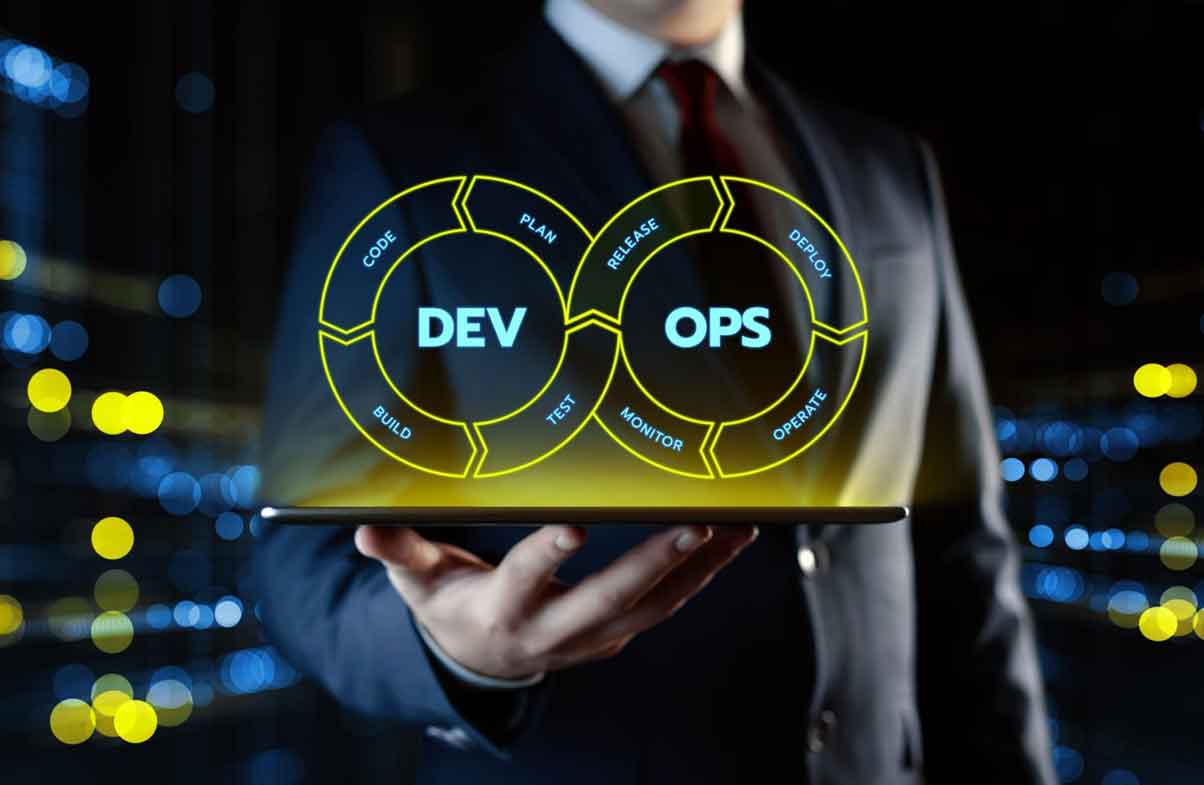
Cloud, DevOps, And Security Guardrails
The future of your tech stack is made or broken by cloud and DevOps options that enable you to operate with an efficient and scalable stack or have a costly and inefficient one.
Most teams should:
- Have a large cloud provider with global locations.
- Use controlled services as opposed to self-hosted services.
- Unify the manner in which applications are constructed and implemented.
Containers aid in maintaining cross-environmental portability. CI/CD pipelines automate build, test, and deploy so you can ship small changes safely.
Add simple security guardrails from day one:
- Management of API keys and password secrets.
- User and service least-privilege access.
- Base image and dependency patching on a regular basis.
- Alerts on abnormal behavior that is centrally logged.
- The simplest uptime and performance monitoring.
These ideas in combination with established Scalable web app design strategies for startups would ensure that cost and risk are kept down in case you have to serve high traffic.
Step 3: Build A Simple 2026 Tech Stack Decision Framework You Can Repeat
You now have the pieces. In order to be useful, transform them into a simple, repeatable mode of work.
An effective structure will make sure that emotion and hype are out of the room. It provides founders, product leaders, and CTOs with a common script on how to make choices about the tech stack in a collected and composed manner.
A Clear Step-By-Step Tech Stack Guide You Can Run In A Workshop
Use this step-by-step tech stack guide as a workshop flow or meeting agenda:
- Record product, user, and risk requirements on one page.
- Team skills, hiring plans, budget, and timeline.
- Suggest 2 or 3 alternatives for each layer: frontend, backend, data, and cloud.
- Grading each option based on fit, cost, risk, and hiring.
- Pick a favorite and run a small proof of concept.
It is a tech stack decision framework in its simplest form, which is a step-by-step guide to a small-scale MVP and a large-scale internal platform rebuild. Repeat this process every time there is a change in requirement, new markets, products or compliance rules.
When To Get Outside Help for Tech Stack Consulting Services
In case of need of outside assistance of Tech Stack Consulting Services. Sometimes the stakes are too high, so it is impossible to go alone.
Outsource tech stack consultations in case of complicated compliance, extremely large scale, obtrusive legacy systems, or enormous bets on AI. A seasoned collaborator has the power to test your strategy of using a tech stack in the startup, update an old enterprise software development stack, and provide advice on your next big launch, in terms of tech stack, clearly.
Imagine these professionals are temporary co-pilots who assist you in choosing the route and send the controls back to your crew.
Looking to Build or Scale Your Web Architecture?
Don't waste hours guessing the right tech stack or DevOps setup. Get a Free 30-Minute Infrastructure Blueprint Consultation with Nanobyte’s Senior Software Architects.
👉 Schedule Your Free Consultation Call Now
Conclusion
The use of smart 2026 technology stacks is based on clear objectives, sincere limitations, and an uncomplicated structure that can be reused. Once you have linked product stage, group skills, budget, and risk, then your stack is no longer an argument; it is a definite choice.
An appropriately selected 2026 technology stack delivers you speed, security, and long-term flexibility. Through this structure, all decisions about tools will be strategic and focused on purpose, which contributes to the teams delivering faster and remaining compliant and at scale.
Now is the most appropriate time to clean your tech stack. Use this guide, and use it in your next planning session and keep in mind the fact that every new tool opportunity should be controlled.

.jpg)